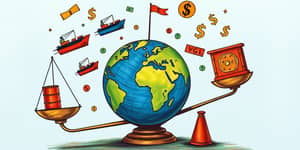
As societies strive for prosperity, they often equate success with economic output. Yet countless voices now call for a shift: measuring progress by how people feel, not just by how much they produce. This article explores the emerging field of happiness economics, showing how it can reshape policy, foster community resilience, and place true well-being at the heart of decision-making.
Conceptual Foundations: What Is Happiness Economics?
Happiness economics is more than a theoretical curiosity. It represents a holistic measure of quality of life, blending objective indicators like income and education with subjective assessments of well-being. By directly surveying individuals, researchers capture life satisfaction, emotional health, and perceived freedom—dimensions that GDP ignores.
Drawing on economics, psychology, and sociology, this field asks pointed questions: How do unemployment, inequality, and environmental change affect our sense of purpose? What institutional arrangements best support individual flourishing? And crucially, how can policymakers maximize welfare rather than just output?
- Definition: Direct measurement of self-reported happiness and life evaluation.
- Scope: Combines subjective well-being with objective quality-of-life metrics.
- Interdisciplinary roots: From Bentham’s utilitarianism to Sen’s capabilities approach.
By recognizing that development must include human experience, happiness economics champions an economy of people, not just products.
Why GDP Alone Falls Short
Gross Domestic Product captures the market value of goods and services, yet it remains blind to distributional fairness, mental health, and ecological limits. While GDP quantifies output, it treats pollution cleanup and healthcare costs as positives. This narrow focus creates perverse incentives, rewarding activities that may undermine well-being.
Key critiques of GDP include:
- Ignoring unpaid work: caregiving, volunteer efforts, and household labor.
- Excluding environmental depletion and social cohesion.
- Masking inequality: identical GDP per capita can conceal vast injustice.
As Robert F. Kennedy observed, GDP measures “everything…except that which makes life worthwhile.” This critique underpins global efforts calling for metrics that balance economic growth with human and planetary health.
Empirical Insights Into Income and Well-Being
Statistical analysis reveals a positive correlation between GDP per capita and average life satisfaction—but the relationship is far from linear. At lower incomes, rising earnings dramatically improve well-being by meeting essential needs. Yet beyond a threshold (often cited around USD 75,000–120,000 annually), diminishing marginal returns to income emerge: further gains yield only modest increases in emotional well-being.
Regression studies suggest that a 1% increase in GDP per capita boosts happiness by roughly 0.3 points on a 0–10 scale. Yet GDP alone explains only about 14% of cross-country differences in happiness. Other variables—social support, health, freedom, honesty—play equal or greater roles.
- Healthy life expectancy
- Perceived social support
- Freedom to make life choices
- Generosity and low corruption
These findings underscore that income is necessary but not sufficient for collective happiness.
Alternative Metrics and Country Case Studies
Responding to GDP’s blind spots, researchers and governments have devised new indices. The Human Development Index combines education, health, and living standards. Bhutan’s Gross National Happiness measures psychological well-being, community vitality, and environmental sustainability. The UN’s World Happiness Report ranks nations by surveyed life evaluations, decomposed into key drivers.
Consider Costa Rica: with a GDP per capita well below that of the United States, it consistently outperforms many wealthy nations in happiness rankings. Strong social ties, universal healthcare, and environmental stewardship demonstrate efficient translation of resources into well-being.
Nordic countries further illustrate this point. Denmark and Finland maintain high life satisfaction not solely through income, but through robust welfare states, trust-rich institutions, and low inequality—showing that a society’s design shapes daily joy.
Methodological Debates and Challenges
Happiness economics faces rigorous scrutiny over measurement validity and cultural bias. Self-reported surveys can suffer from adaptation effects—people recalibrate expectations after life events—and from differences in linguistic interpretation across cultures.
Critics question whether subjective well-being captures deeper values like purpose and legacy. Some argue for integrating qualitative narratives and ethnographic studies to complement quantitative scales. Others explore dynamic tracking of affect throughout the day, using digital diaries or wearable sensors.
Despite these debates, methodological advances continue to refine the field. By cross-validating multiple survey tools and adjusting for cultural response styles, researchers strive for robust, comparable indicators of happiness worldwide.
Policy Implications for a Well-Being Economy
Governments around the world are heeding the call for well-being-centered policy. Key recommendations include:
- Embedding happiness metrics into budgetary decisions and performance audits.
- Prioritizing mental health services, social cohesion programs, and work-life balance legislation.
- Investing in green infrastructure to safeguard ecological health and future prosperity.
By shifting from austerity-driven growth to inclusive well-being, policymakers can achieve sustainable development that truly serves citizens. A well-being economy reframes success, valuing human experience, environmental stewardship, and community resilience.
Ultimately, happiness economics is not a utopian dream but a practical guide: it directs resources where they most improve lives, fosters empathy in governance, and measures what truly matters. As societies evolve, embracing these insights will be essential to build flourishing communities in harmony with our planet.
References
- https://sdg.iisd.org/news/beyond-gdp-a-unique-opportunity-to-address-well-being-challenges/
- https://anmoresouth.com/updates/happiness-economics-measuring-prosperity-beyond-gdp/
- https://econreview.studentorg.berkeley.edu/beyond-gdp-economics-and-happiness/
- https://www.ebsco.com/research-starters/economics/happiness-economics
- https://www.imf.org/en/publications/fandd/issues/2024/03/picture-this-looking-beyond-gdp
- https://anielski.com/10-economics-happiness/
- https://www.exploring-economics.org/en/discover/beyond-gdp/
- https://insights.som.yale.edu/insights/what-are-the-economics-of-happiness
- https://www.oecd.org/en/topics/policy-issues/well-being-and-beyond-gdp.html
- https://pmc.ncbi.nlm.nih.gov/articles/PMC7652195/
- https://ideas.repec.org/a/spr/soinre/v179y2025i1d10.1007_s11205-025-03604-y.html
- https://positivepsychology.com/happiness-economics/