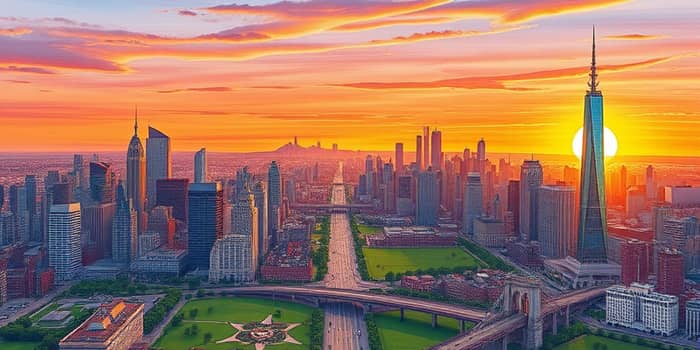
Urbanization stands as the defining global demographic shift of our time. As more people flock to cities, these dense centers become crucibles of innovation, opportunity, and economic output. Yet this rapid expansion brings complex challenges that demand holistic solutions.
The Urbanization Surge: Global Trends
For the first time in history, urban residents outnumber those in rural areas. Today, approximately 4.4 billion people live in cities—56% of the world’s population—and that figure is expected to soar to 6.7 billion by 2050.
By mid-century, an estimated 68–70% of humanity will call urban areas home. Virtually all future population growth will occur in these dense centers, with Asia and Africa leading the expansion.
The United States already reached 83% urbanization in 2020 and is projected to hit 89% by 2050. This global wave of urban growth underscores cities’ rising economic weight: they generate about 80% of global GDP and account for 88% of private-sector job creation.
Mechanisms of Urban Economic Growth
At the heart of urban prosperity lie agglomeration economies and productivity. When firms, workers, and institutions cluster closely, they benefit from reduced transport costs, quicker information flows, and richer networks.
- Dense networks of trade and competition improve prices and quality
- Exchange of information and diffusion of ideas accelerates innovation
- Specialization in skills, tasks, and functions raises productivity
This concentration creates a virtuous cycle of economic dynamism: higher incomes draw more investment, which spawns new enterprises and jobs, further boosting incomes and innovation.
Public investments also yield higher returns in city environments. Dense urban areas lower per capita costs for transit, utilities, and emergency services, making every dollar of public spending more impactful.
As economies evolve, they shift from agriculture to industry and services. In the “new urban economy,” idea-intensive and service-based sectors—commercial banking, finance, professional services, creative industries—cluster in core cities. Manufacturing and land-intensive operations often migrate to suburban fringes, feeding the central hubs with supply chains and specialized labor.
Positive Economic Impacts
Cities function as engines of economic growth and innovation. Although causal links between urbanization and higher average incomes are complex, the correlation is undeniable. Urban residents typically enjoy greater access to education, healthcare, and cultural amenities.
Between 2010 and 2020, urban centers produced 88% of private-sector jobs, highlighting their role as labor-market powerhouses. They attract diverse talent pools and foster better matching of skills to job openings, which drives labor productivity upward.
- Diverse job opportunities across industry, services, and public sectors
- Improved access to education, vocational training, and innovation hubs
- Concentrated infrastructure economies of scale in transport and utilities
Well-planned cities reduce per capita costs for energy, water, sanitation, and public transport. These infrastructure economies of scale enhance trade, logistics, and digital connectivity—vital for Global South cities integrating into global value chains.
Urbanization underpins structural transformation, shifting economies from agrarian roots to industrial and service-led growth. Cities facilitate the diffusion of digital platforms, fintech solutions, and ICT-enabled services, accelerating productivity gains and widening access to global markets.
Challenges and Economic Downsides
Yet the forces that drive growth also generate new pressures. Urban inequality often exceeds rural levels: in 36 of 42 countries with data, income inequality is higher in cities, and larger metros tend to be richer but more unequal.
- Rising inequality and spatial segregation within metropolitan areas
- Informal housing, labor precarity, and limited social protection
- Infrastructure deficits, service backlogs, and fiscal constraints
Poorly planned urbanization leads to informal settlements where residents face insecure land tenures, overcrowded housing, and limited access to clean water and sanitation. This concentration of urban poverty magnifies health risks and limits economic mobility.
Rapid growth outpaces investments in transport, water and sanitation, energy, and emergency services. In the Asia-Pacific region, over one billion people lack safe, inclusive, and resilient urban environments, and many cities operate with fiscal autonomy below 10%—insufficient to fund necessary infrastructure and climate adaptation.
Congestion and rising land values create high living costs that can offset agglomeration benefits. Longer commute times and housing shortages drive some low-income workers to the urban periphery, undermining access to jobs and schools. Meanwhile, urban areas occupy only 2% of global land but contribute up to 70% of greenhouse gas emissions, challenging cities to decouple growth from carbon footprints.
Toward Inclusive and Sustainable Cities
Addressing these challenges requires integrated policies that balance growth with equity and resilience. Targeted social programs, affordable housing initiatives, and formalization of informal sectors can reduce poverty and bridge spatial divides.
Investments in mass transit, renewable energy, and green infrastructure foster sustainable urban development pathways. By prioritizing compact, mixed-use planning, cities can alleviate congestion, lower emissions, and protect green spaces.
Fiscal reform is equally vital. Granting local governments sufficient revenue autonomy enables them to invest in critical services and climate adaptation measures. Furthermore, data-driven urban governance can optimize resource allocation and ensure transparency.
Ultimately, the same agglomeration forces that drive economic dynamism can yield inclusive prosperity. When cities harness innovation, sustainable infrastructure, and equitable policy frameworks, they become true engines of growth and well-being for all residents.
References
- https://www.iied.org/rethinking-urbanisation-economic-development
- https://www.un.org/development/desa/en/news/social/urbanization-expanding-opportunities-but-deeper-divides.html
- https://zenodo.org/records/18183341
- https://css.umich.edu/publications/factsheets/built-environment/us-cities-factsheet
- https://www.abacademies.org/articles/the-economics-of-urbanization-challenges-and-opportunities-16193.html
- https://ourworldindata.org/urbanization
- https://www.undp.org/stories/challenges-and-opportunities-rapid-urban-expansion
- https://kingcenter.stanford.edu/news/future-urban
- https://www.un.org/en/chronicle/article/addressing-sustainable-urbanization-challenge
- https://www.worldbank.org/ext/en/topic/urban-development
- https://www.brookings.edu/articles/the-new-urban-economy-opportunities-and-challenges/
- https://urbanization.yale.edu/research/theme-4
- https://publications.wri.org/transformations-equitable-sustainable-cities/current-urbanization-global-south-realities