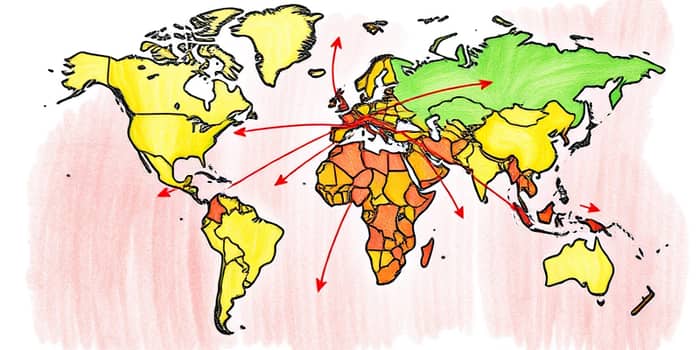
In an era of rising geopolitical tension and economic uncertainty, understanding the mechanics and consequences of trade wars has never been more critical. This article provides a comprehensive toolkit to navigate these storms, illustrated by two defining case studies, and offers practical guidance for businesses and policymakers alike.
Conceptual Toolkit: Understanding Trade Wars
A trade war erupts when nations impose tit-for-tat tariffs, quotas, or other barriers to secure leverage. While often justified as protecting local industries or national security, these measures can spiral into lasting economic harm.
- Tariffs: import taxes applied to specific products or broad categories.
- Quotas and export controls: limits on quantities or restrictions on critical technologies.
- Non-tariff barriers: sanctions, technical standards, or subsidies tied to local content.
Trade wars are not a modern invention. The Smoot–Hawley Tariff Act of the 1930s stifled global commerce and deepened the Great Depression. In the 1980s, US–Japan frictions foreshadowed focused battles over technology and autos—preludes to today’s grander confrontations.
Case Study One: The 2018–2019 US–China Trade War
In 2018, the United States launched its first comprehensive trade conflict since the Reagan era, targeting approximately $350 billion of Chinese imports. China retaliated on $100 billion of US exports, marking a rupture in decades of liberalization.
- US consumers and firms bore most tariff costs, passing higher prices onto households.
- Limited reshoring benefits: modest output gains in protected industries, offset by higher production costs downstream.
- Trade diversion: supply chains reoriented toward Vietnam, Mexico, and other lower-cost producers.
By late 2019, studies agreed that the net effect was minimal job creation and higher consumer prices. Far from isolating China, the conflict spurred a broader re-routing of global supply networks.
Case Study Two: The 2025 Liberation Day Trade War
On April 2, 2025—dubbed “Liberation Day”—the US invoked the International Emergency Economic Powers Act (IEEPA) to impose reciprocal tariffs on $1 trillion of imports, soon rising to $1.4 trillion. Major partners, including China, Canada, and the EU, retaliated swiftly.
Legal setbacks followed. In February 2026, the Supreme Court invalidated key IEEPA tariffs, prompting the administration to reimpose a 10% across-the-board surcharge under Section 122. That authority expires July 24, 2026, unless extended.
Modeling from the Peterson Institute projects:
Further NBER analysis suggests US real income could fall by 1% by 2028, with some states losing over 3%. Key partners—Canada, Mexico, China, Ireland—face comparable contractions.
Winners and Losers
Most economists agree: there are no lasting winners in a full-scale trade war. The World Economic Forum warns that widespread protectionism could permanently cost 3% of US GDP and 4% of EU GDP.
- Domestic winners: protected industries like steel and aluminum see short-term output and employment gains.
- Domestic losers: consumers pay higher prices; downstream manufacturers incur greater costs.
- Global losers: close trading partners suffer income and employment declines, propagating volatility worldwide.
Even designated beneficiaries eventually face higher input costs and reduced competitiveness. In the long run, productivity and growth erode as markets fragment.
Global Repercussions and Practical Guidance
Trade wars serve as geopolitical tools, not purely economic levers. They accelerate decoupling of critical supply chains while prompting innovative rerouting strategies.
For businesses and policymakers seeking resilience, consider these strategies:
- Diversify supply chains across regions to mitigate exposure to any single market.
- Invest in long-term productivity gains through technology adoption and workforce upskilling.
- Strengthen multilateral trade institutions by supporting transparent, rules-based dispute resolution.
At the national level, governments can:
- Engage in proactive dialogue with partners to de-escalate tensions.
- Develop targeted adjustment assistance for industries and communities harmed by sudden tariff shifts.
- Foster public-private partnerships to enhance supply chain visibility and risk management.
In times of upheaval, nurturing resilience through adaptation is paramount. By learning from past episodes and employing diversified strategies, stakeholders can weather disruptions and chart a course toward sustained growth and cooperation.
Ultimately, trade wars test the balance between sovereignty and interdependence. While temporary gains may accrue to a few, the broader tapestry of global commerce and innovation thrives on open, predictable markets. As nations and firms navigate the uncertain terrain ahead, the most enduring victory will be reclaiming the spirit of collaboration that underpins shared prosperity.
References
- https://www.euronews.com/business/2026/03/26/the-biggest-winners-and-losers-of-the-tariff-war-as-ai-related-trade-skyrockets
- https://www.youtube.com/watch?v=Fo3-qJwXdlw
- https://atlasinstitute.org/the-winners-losers-and-reasons-for-a-renewed-global-trade-war/
- https://www.piie.com/blogs/realtime-economics/2025/global-trade-war-update
- https://www.weforum.org/stories/2019/11/who-benefits-from-a-trade-war/
- https://www.nber.org/papers/w33792
- https://www.youtube.com/watch?v=4HYif62Fx3Q
- https://egc.yale.edu/research/economic-impacts-us-china-trade-war
- https://www.youtube.com/watch?v=8QMBv_e95g0
- https://www.atlanticcouncil.org/programs/geoeconomics-center/trump-tariff-tracker/
- https://budgetlab.yale.edu/research/tracking-economic-effects-tariffs
- https://www.jpmorgan.com/insights/global-research/current-events/us-tariffs