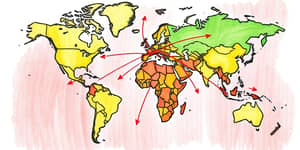
In a world where natural resources and low-cost labor once defined economic might, a new force emerges as the cornerstone of prosperity: innovation. No country embodies this transformation more vividly than Israel, the famed Startup Nation. A small land, a bold vision, and an unwavering drive have propelled it to the forefront of global technology and entrepreneurship.
From the shores of the Mediterranean to laboratories bursting with ideas, Israel demonstrates how deliberate policies, culture, and support systems can turn a resource-poor country into a global innovation powerhouse. This article explores the lessons, structures, and human stories that make the Startup Nation a model for economic resilience and growth.
Unleashing Innovation as the New Growth Engine
Innovation today is far more than a buzzword. It is a transformative economic growth engine that redefines productivity across healthcare, education, energy, and transportation. In OECD economies, nearly 38 percent of enterprises report process innovations, while 26 percent unveil new products. These improvements drive competitiveness in an era of constant disruption.
When nations invest strategically in research and development, they fuel the creation of entirely new industries. Breakthroughs in biotechnology, clean energy, and digital services do more than add value—they reshape economic landscapes, creating high-quality jobs and anchoring long-term prosperity.
The Blueprint of a Startup Nation
Israel’s journey began with a clear mission: to harness the potential of human capital over natural endowments. Government initiatives, generous grants, tax incentives, and support for venture capital established the groundwork. At the same time, immigration policies attracted scientists, engineers, and entrepreneurs from around the globe.
- Unwavering investment in R&D: Israel dedicates 6 percent of its GDP to research, the highest ratio worldwide.
- Dense innovation clusters: Tel Aviv, Haifa, and Jerusalem feature universities, labs, and thriving startups.
- Robust intellectual property systems: Strong patent protections encourage risk-taking and collaboration.
- Dynamic entrepreneurial ecosystem: High entry and exit rates of startups foster agility and renewal.
By focusing on these pillars, Israel transformed into a nation that produces more startups per capita than any other country. It attracts twice as much venture capital per person as the United States and thirty times more than Europe.
Structural Pillars Driving Israel’s Innovation
Beyond policy lies culture—an environment that celebrates creativity, risk-taking, and swift execution. Mandatory military service, for instance, instills leadership skills and flat hierarchies that carry over into civilian ventures. Units like elite intelligence teams refine technical expertise and mission-focused collaboration.
Universities and research centers maintain close ties to industry, channeling breakthroughs directly into startups. Tech giants such as Intel, Google, and Cisco maintain R&D centers in Israel to tap into this network of talent and ideas.
This sustained commitment to science and technology, combined with a mission-focused leadership culture, creates an environment where innovation thrives under real-world pressures and high expectations.
Global Context: From Clusters to Competitiveness
While Israel stands out, it operates within a broader global landscape. According to the Global Innovation Index, clusters such as Silicon Valley, Shenzhen–Hong Kong–Guangzhou, and Tokyo–Yokohama account for 70 percent of patents and venture capital activity. These hubs leverage dense networks of universities, investors, and enterprises to magnify their impact.
Yet smaller economies like Switzerland, Sweden, Singapore, and the Netherlands prove that size is no barrier. Israel joins this elite group, leveraging focused policies and a culture of collaboration to punch well above its weight on the world stage.
What the World Can Learn
- Invest boldly in research and talent: Sustained funding for R&D and education fuels breakthroughs.
- Foster a risk-tolerant culture: Encourage experimentation, accept failure, and reward perseverance.
- Build strong support networks: Align universities, government, and private capital to accelerate ideas to market.
- Embrace global collaboration: Attract talent with open immigration and partnerships that transcend borders.
Adopting these lessons requires commitment and vision. Policy-makers must view innovation not as a peripheral activity but as the central pillar of economic strategy. Businesses need to embrace agile structures that empower teams and reward bold thinking.
Above all, societies must cultivate the belief that every individual can contribute to progress. From student competitions to military training, every institution can become an incubator for the next generation of entrepreneurs and inventors.
Israel’s journey from a young nation navigating scarcity to a beacon of technological leadership reminds us that great challenges can spark the greatest achievements. When a country bets on human creativity and backs it with resources, it unleashes a powerful force that transforms lives and reshapes economies.
The Startup Nation story is more than a case study—it is a call to action. In a time of rapid global change and recurring economic shocks, innovation offers the clearest path to resilience and shared prosperity. By harnessing the lessons of Israel’s rise, nations can build their own engines of growth and secure a future defined not by constraints, but by endless possibility.
References
- https://www.cfr.org/books/start-nation
- https://www.wipo.int/en/web/global-innovation-index/2025/index
- https://blog.amplifyetfs.com/insights/startup-nation-investment-potential
- https://www.statsamerica.org/ii2/about.aspx
- https://meinpodcast.de/bookey-book-summary-and-review/a-book-start-up-nation-an-overview-of-israels-success/
- https://www.oecd.org/en/data/insights/data-explainers/2026/04/oecd-business-innovation-statistics-unpacking-key-trends-and-findings.html
- https://olbios.org/start-up-nation-israels-economic-miracle/
- https://electroiq.com/stats/business-innovation-statistics/
- https://en.wikipedia.org/wiki/Start-up_Nation
- https://ncses.nsf.gov/pubs/nsb20204/innovation-indicators-united-states-and-other-major-economies
- https://www.jewishbookcouncil.org/book/start-up-nation-the-story-of-israels-economic-miracle
- https://www.wipo.int/web-publications/global-innovation-index-2025/en/global-innovation-tracker.html
- https://www.youtube.com/watch?v=PPoskTRePp8
- https://www.brookings.edu/articles/technology-and-the-innovation-economy/
- https://www.bea.gov/about/innovation-bea