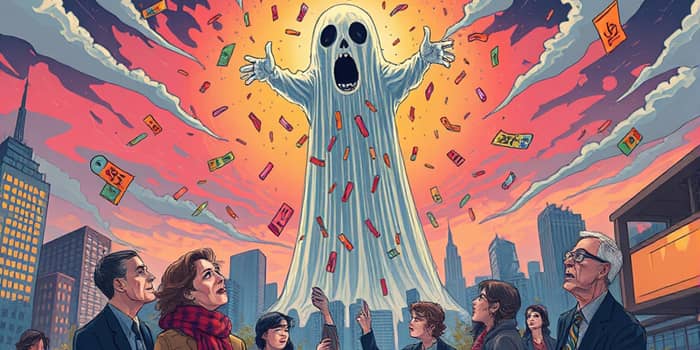
When prices begin to fall across broad swathes of the economy, the impact can be more than just a temporary reprieve at the cash register. Deflation– a sustained decline in the general price level– has the power to reshape behavior, unbalance financial systems, and leave policymakers scrambling for answers. As we confront slowing inflation in many advanced economies, the haunting specter of deflation demands our full attention.
In this article, we explore the nature of deflation, its root causes, historical precedents, and the very real dangers it poses if allowed to take hold. Armed with these insights, readers will gain practical understanding and prepare to respond should deflationary pressures reemerge.
Understanding Deflation and Its Distinction from Disinflation
Deflation occurs when the overall price level of goods and services falls for a prolonged period, yielding a negative inflation rate. It differs sharply from disinflation, which merely describes a slowdown in the rate of price increases while inflation remains positive.
Key to understanding deflation is recognizing it as a persistent collapse of aggregate demand rather than isolated price dips. A one-off drop in oil or technology costs does not constitute systemic deflation; genuine deflation is broad-based and sustained, reshaping spending behavior and financial stability.
Causes and Transmission Channels of Deflation
Economists distinguish between two broad drivers of deflation: demand-side contractions that often herald recessions, and supply-side shifts that can be benign under certain conditions. In practice, episodes of deflation may blend both effects, but the consequences can diverge dramatically.
- Financial crises and credit crunches that curb borrowing and spending
- Severe asset price collapses, undermining confidence and wealth
- Sudden fiscal austerity measures that depress aggregate demand
- Global shocks that interrupt trade and investment flows
- Productivity breakthroughs leading to cost-efficient production
- Technological progress driving rapid productivity-driven supply-side deflation
- Declines in input costs, such as cheaper energy or raw materials
- Structural shifts expanding capacity faster than demand grows
Lessons from History: When Deflation Haunts Economies
The most infamous case of deflation occurred during the Great Depression of the 1930s. U.S. consumer prices plunged by roughly 25to 30 percent over several years, real GDP collapsed, and unemployment soared above 25 percent.
Policy missteps, a rigid adherence to the gold standard, and debt-deflation dynamics combined into a perfect storm. As prices fell, the real value of debts rose, precipitating waves of defaults and bank failures that deepened the economic malaise.
Japan’s experience from the early 1990s through the 2000s offers another cautionary tale. After its asset bubble burst, the country faced near-zero inflation for decades, persistent slow growth, and a banking sector burdened by nonperforming loans.
Even so-called “good deflations” in the late 19th-century United States and United Kingdom saw mild price declines alongside strong productivity gains. These episodes featured robust real growth and an expanding output, illustrating that not all deflation is identical in effect.
The Danger of a Deflationary Spiral and the Zero Lower Bound
Once deflation takes hold, it can become self-reinforcing. Falling prices reduce revenues, prompting firms to cut wages and jobs. As incomes shrink, households postpone purchases, expecting even lower prices ahead.
Central banks strive to prevent entrenched expectations of falling prices because escaping a deflationary spiral is notoriously difficult. With nominal interest rates near zero– the nominal rates at the zero bound– real interest rates become prohibitively high, further suppressing borrowing and investment.
The result: policy stimulus loses potency just when the economy needs it most.
Winners and Losers in a Deflationary Environment
Deflation reshapes distribution of wealth and burden. Some emerge relatively unscathed, while others face severe hardship.
- Creditors and long-term bondholders benefit as their claims rise in real value
- Cash holders enjoy enhanced purchasing power
- Debtors, including households with mortgages and leveraged firms, see rising real debt burdens
- Workers face layoffs, wage cuts, and rising unemployment
The Ongoing Debate: Is Deflation Risk Overblown or Still Pressing?
Some analysts argue that modern monetary frameworks, quantitative easing tools, and inflation-targeting regimes render systemic deflation unlikely. They point to central banks’ willingness to tolerate modest overshoots of inflation targets as a buffer against downward price pressures.
Others counter that demographic headwinds, high private and public debt levels, and global excess capacity could yet conspire to reignite deflationary forces. The specter remains, they warn, because once confidence falters and expectations shift, even advanced economies can fall into deflation’s grip.
Understanding deflation– its causes, mechanisms, and consequences– equips policymakers, businesses, and households to recognize early warning signs and act decisively. Whether through targeted fiscal support, creative monetary easing, or policies that promote investment and confidence, the fight against deflation requires relentless vigilance.
As we confront a world of uncertain growth and lingering debt overhangs, the lessons of the past echo with urgency. By studying the specters of history and preparing practical responses, we stand a better chance of keeping prices stable, economies growing, and societies thriving.
References
- https://www.empower.com/the-currency/money/deflation
- https://corporatefinanceinstitute.com/resources/economics/deflation/
- https://acrinv.com/specter-deflation/
- https://www.frbsf.org/research-and-insights/publications/doctor-econ/2003/05/deflation-risks/
- https://www.cato.org/publications/commentary/deflation-is-not-problem
- https://www.youtube.com/watch?v=PX9XdZGsFXs
- https://cepr.net/publications/threat-of-deflation-is-exaggerated/
- https://study.com/academy/lesson/what-is-deflation-definition-causes-effects.html
- https://www.cigionline.org/articles/spectre-deflation/
- https://ideas.repec.org/p/ags/quedwp/273562.html
- https://eh.net/encyclopedia/deflation/
- https://www.brookings.edu/articles/is-deflation-the-worry/
- https://www.youtube.com/watch?v=FYwT37FLS8M