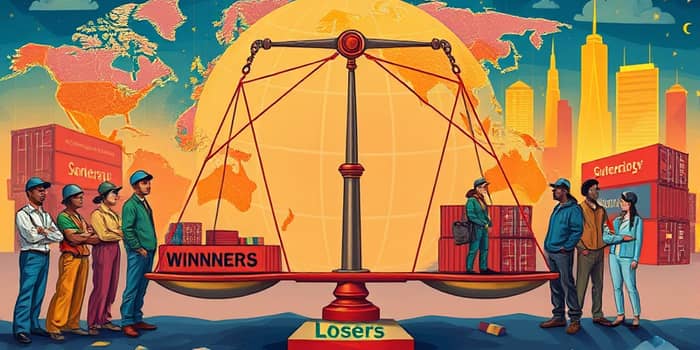
Across borders and balance sheets, trade agreements promise prosperity and predictability. But the gains are uneven and sovereignty is contested. Understanding these forces helps communities navigate change and shape fairer outcomes.
As the global economy evolves, trade deals remain pivotal. They unlock markets, drive innovation, and reshape industries. Yet they also intensify job churn and sectoral disruption and spark debates over national control.
Why Countries Embrace Trade Agreements
Governments pursue trade treaties to expand opportunities and anchor economic frameworks. By lowering barriers and codifying rules, they aim to:
- Access larger markets for exporters and investors
- Secure binding commitments and reciprocity on tariffs and subsidies
- Enhance predictability through dispute settlement mechanisms
- Stimulate domestic investment in competitive sectors
These pacts reflect a strategic choice: exchange some policy autonomy for broader economic gains and legal safeguards [3][10].
Winners and Losers: Distributional Realities
Trade deals generate significant net gains. U.S. real incomes are an estimated 9% higher due to liberalization since World War II, translating into roughly $1.5 trillion of extra income in 2013 terms [6]. Exports supported about 11.3 million American jobs in 2013, boosting GDP growth by 0.7 percentage points annually [6]. Yet these benefits are unevenly spread.
Consumers often enjoy more, better-quality goods at lower prices, with savings on essentials like clothing and groceries. But the per-person gain is small, making it diffuse and politically invisible [3][7].
By contrast, workers in import-competing industries face concentrated adjustment costs. Plant closures and wage pressure can devastate communities reliant on manufacturing or vulnerable sectors [5][7].
- Export-oriented firms and competitive regions expand
- Import-competing sectors and displaced workers lose out
- Lower-income households bear higher costs from tariffs
Trade Trends in a Changing World
Global trade growth has slowed, and protectionism is rising. According to UNCTAD, world trade reached $33 trillion in 2024, up 3.7%, with services leading at 9% growth and goods at 2% [2]. However, the World Bank reports that goods trade shrank by 2% in 2023 and nearly 3,000 new trade restrictions were imposed, five times the number in 2015 [4].
These shifts underscore a key paradox: global interdependence is deep, yet policy space is narrowing as nations jostle for advantage.
Sovereignty under Trade Regimes
Critics worry that trade pacts erode national authority. In practice, treaties honor formal sovereignty but limit discretion on tariffs, subsidies, and domestic preferences [3][13]. Principles like most-favored nation and national treatment bind governments to nondiscrimination [3]. Dispute settlement panels can override domestic decisions, sparking fears that unelected bodies trump elected legislatures.
Still, proponents argue that policy discretion shrinks in practice only in areas central to market access and investment security. The reward is greater trade volumes, stable rules, and increased foreign direct investment [10][13].
Building Inclusive Policies for the Future
To harness trade’s benefits while mitigating its costs, policymakers and communities must collaborate on inclusive strategies:
- Invest in workforce training and skill upgrades
- Strengthen social safety nets to support displaced workers
- Promote regional diversification and infrastructure development
- Include stakeholders in negotiating and implementing agreements
By proactively addressing distributional impacts, governments can reduce visible job losses and sectoral decline and preserve public support for open markets [9][11].
Trade debates are not zero-sum. They hinge on how gains are shared and how sovereignty is practiced. Thoughtful policy design can ensure that trade deals uplift communities, protect livelihoods, and maintain democratic control.
Ultimately, the question is not whether to trade, but how to trade fairly and wisely. Embracing this challenge will shape a more resilient, inclusive global economy—one where the promise of connected markets truly benefits all.
References
- https://www.econlib.org/library/Columns/y2017/Jasaytradewars.html
- https://unctad.org/publication/global-trade-update-march-2025
- https://www.mercatus.org/research/policy-briefs/benefits-free-trade-addressing-key-myths
- https://blogs.worldbank.org/en/voices/global-trade-has-nearly-flatlined-populism-taking-toll-growth
- https://www.bayareaeconomy.org/report/the-real-impact-of-trade-agreements/
- https://ustr.gov/issue-areas/economy-trade
- https://www.clevelandfed.org/publications/economic-commentary/2019/ec-201915-winners-and-losers-from-trade
- https://blog.iese.edu/newsletter-library/109-research-guide/
- https://blogs.sussex.ac.uk/uktpo/publications/winners-and-losers-from-international-trade-what-do-we-know-and-what-are-the-implications-for-policy/
- https://www.trade.gov/trade-agreements
- https://www.oxfordeconomics.com/trade/
- https://ourworldindata.org/trade-and-globalization
- https://www.youtube.com/watch?v=IBSRhPpMoeA