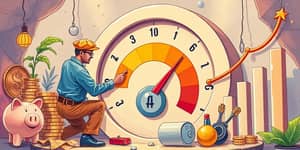
Economic uncertainty has touched every corner of our lives, from job disruptions to unexpected medical bills. Yet, at the heart of recovery lies a powerful attribute: financial resilience. This isn’t merely surviving a setback, but emerging fortified, wiser, and more confident. In this article, we explore what financial resilience means, why it matters now more than ever, and how you can build it through a structured, phased approach.
Understanding Financial Resilience
Financial resilience refers to a household’s ability to financially withstand and recover from economic challenges. It is determined by the magnitude of shock—job loss, medical emergency, or market volatility—that a household can absorb without resorting to high-cost debt or jeopardizing basic needs.
According to the NC State Financial Security Framework, resilience rests on four pillars:
- Routinely positive cash flows to cover day-to-day expenses reliably.
- Personal resources and savings cultivated as a habit and safety net.
- Access to quality benefits including public assistance and employer-sponsored plans.
- Practical financial know-how enabling informed decisions and behavior change.
Together, these elements form a roadmap toward greater stability and confidence, regardless of external shocks.
Nurturing Psychological Strength
Financial resilience is as much about mindset as it is about numbers. Mental toughness enables us to persevere, adapt, and grow when finances falter. The following psychological skills are crucial:
- Acceptance of reality: Acknowledge the setback rather than deny it, laying the groundwork for recovery.
- Focus on controllable factors: Direct energy toward budgeting, job search efforts, and saving, not uncontrollable markets.
- Reframing setbacks as temporary: View a financial misstep as a lesson, not a life sentence.
- Growth mindset and self-efficacy: Cultivate the belief that skills and outcomes can improve with effort.
By pairing emotional flexibility with practical action, you transform obstacles into opportunities for growth.
A Phased Roadmap to Financial Stability
Building resilience is best approached in phases. Each phase introduces tangible targets, tools, and behaviors that build on one another.
Phase 1: Establishing the Safety Net
Begin with an emergency fund cushion to weather immediate storms. Aim for:
Keep these funds in a separate account, where they are accessible yet not tempting for daily spending.
Phase 2: Mastering Cash-Flow Management
A clear budget is the foundation of routine positive cash flow. Use the 50/30/20 rule:
- 50% of income for essentials: housing, utilities, groceries
- 30% for discretionary spending: dining, entertainment
- 20% toward savings and debt repayment
To implement this:
- Track every expense for 30 days to identify leaks.
- Categorize spending into needs and wants.
- Automate transfers for savings on payday.
- Review and adjust monthly to stay on track.
Automated transfers and weekly check-ins build momentum and reduce the mental burden of decision-making.
Phase 3: Cultivating a Savings Culture
Beyond emergency savings, channel routine surpluses into targeted goals:
- Home repairs fund to avoid high-cost loans when urgent fixes arise.
- Debt repayment accelerator focusing on high-interest balances first.
- Long-term investment account for retirement or major life milestones.
Behavioral strategies like rounding up purchases or saving a fixed percentage of each paycheck make saving automatic and painless.
System-Level Supports and Benefits
Resilience is not solely an individual endeavor. Systemic supports make a profound difference:
Public benefits such as unemployment insurance, food assistance, and healthcare subsidies provide temporary relief, preventing backsliding into hardship.
Employer benefits further reinforce stability:
- Health insurance shields against catastrophic medical bills.
- Retirement plan matching accelerates long-term savings.
- Paid leave and disability coverage guard income during crises.
Advocating for stronger consumer protection and accessible financial products—credit unions, low-fee accounts, regulated credit—helps households avoid predatory traps.
Building Financial Know-How and Lasting Behavior Change
Skills and mindset converge to sustain resilience. Financial education equips you with:
- Budgeting and expense tracking techniques
- Credit understanding: scores, interest rates, repayment methods
- Investment basics: risk tolerance, diversification, time horizon
- Insurance essentials: coverage types and cost-benefit analysis
Equally vital is cultivating habits:
Break large goals into small, achievable tasks. Celebrate each milestone—be it a completed budget review, an automated transfer, or the elimination of a small debt. These wins fuel confidence and reinforce progress.
Lean on your community. Share goals with friends or a financial coach. Accountability partners can offer encouragement, fresh perspectives, and practical advice when challenges arise.
Conclusion: Bouncing Back with Purpose
Financial resilience is more than an emergency plan; it’s a transformative journey blending emotional adaptability with practical strategies. From laying the groundwork with an emergency fund to mastering cash flow, building a savings culture, leveraging benefits, and deepening your financial know-how, each step fortifies your ability to face life’s uncertainties.
By embracing this roadmap, you don’t just recover—you emerge stronger, wiser, and ready to seize future opportunities. Begin today: define your first milestone, automate a small savings transfer, or reach out for support. The path to resilience starts with a single, purposeful step.
References
- https://iei.ncsu.edu/roadmap-to-financial-resilience/
- https://shorelocalnews.com/building-resilience-strategies-to-bounce-back-from-setbacks/
- https://www.hopecu.org/articles/building-financial-resilience-how-to-navigate-financial-challenges/
- https://www.lyrahealth.com/blog/building-resilience/
- https://fedinprint.org/item/fedhpw/10966
- https://www.headspace.com/mindfulness/bouncing-forward-with-resilience
- https://www.undrr.org/news/launch-new-roadmap-financing-adaptation-and-resilience
- https://www.christianmuntean.com/five-ways-to-bounce-back-sometimes-even-stronger/
- https://www.fsb.org/2021/07/fsb-roadmap-for-addressing-climate-related-financial-risks/
- https://www.drtracyhutchinson.com/7-ways-mentally-strong-people-bounce-back-from-failure/
- https://www.riba.org/work/business-tools/business-resilience/
- https://www.nhs.uk/every-mind-matters/mental-wellbeing-tips/self-help-cbt-techniques/bouncing-back-from-lifes-challenges/
- https://www.apa.org/topics/resilience/building-your-resilience