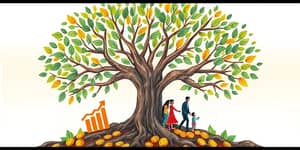
In an era of complex challenges, nations seek measures that capture true prosperity and progress.
Why GDP is No Longer Enough
Gross Domestic Product (GDP) emerged as a powerful tool to quantify economic output, tracking the monetary value of all final goods produced within national borders. For decades, policymakers relied on GDP to guide fiscal and monetary decisions, monitor business cycles, and compare economic performance across countries.
However, this single indicator carries systematic blind spots that obscure important realities. Simon Kuznets, the pioneer of national accounting, warned that “the welfare of a nation can scarcely be inferred from a measurement of national income.” That caution grows more urgent as societies confront environmental degradation, social inequality, and mental health crises.
- Well-being and welfare: GDP omits factors shaping quality of life.
- Distribution and inequality: No insight into how benefits are shared.
- Environmental degradation: Pollution and resource loss inflate figures.
- Non-market activities: Unpaid care work and community services ignored.
- Future generations: Current gains may undermine long-term viability.
Since the 1970s, world GDP soared from around USD 4.5 trillion to over USD 100 trillion today, accompanied by a 150% rise in global median income. Yet environmental pressures and social disparities intensify, revealing a crisis of measurement that fails to reflect what truly matters for human and planetary health.
The Global “Beyond GDP” Agenda
Recognizing these limitations, international bodies launched a paradigm shift toward a broader measurement system that includes well-being, inclusion, sustainability, and resilience alongside traditional economic output. Central to this effort is the United Nations’ “Beyond GDP” initiative, mandated in the Pact for the Future (2024). Member states tasked a High-Level Expert Group (HLEG) with designing a compact dashboard of indicators that complements but does not replace GDP.
In May 2026, the HLEG published “Counting What Counts: A Compass of Progress for People and Planet,” proposing a global blueprint of key domains: well-being, equity and inclusion, and environmental stewardship. These metrics aim to guide policy toward shared prosperity, institutional resilience and respect for nature, reflecting a philosophical shift where purpose aligns with what people value.
The Organisation for Economic Co-operation and Development (OECD) advanced similar concepts through its “Well-being” framework, advocating for fairer incomes, better health, and enriched social connections. By integrating multidimensional well-being indicators—such as work-life balance, civic engagement, and environmental quality—the OECD underscores the need for economies that serve people and planet alike.
At the national level, statistical offices experiment with enriched accounts. The UK’s Office for National Statistics is developing “inclusive income estimates” that combine GDP with the economic value of unpaid household work, ecosystem services, and broader assets. This approach recognizes that long-term well-being depends on capital stocks underpinning future prosperity.
Adjusted Economic Aggregates
One strand of innovation adapts existing economic aggregates by adjusting for social and environmental factors. These metrics recalibrate growth figures to present a more holistic picture of welfare and sustainability.
The Genuine Progress Indicator (GPI) begins with personal consumption, then adjusts for positive contributions—such as housework, volunteering, and education—and subtracts costs like pollution, crime, and resource depletion. By counting the life-sustaining functions of households and ecosystems, GPI ensures that activities eroding natural capital no longer appear as progress.
Green GDP subtracts environmental costs directly from standard GDP, making ecological degradation and resource depletion visible in national accounts. This metric holds governments accountable for conservation by reporting environmental losses as economic declines rather than concealed side effects.
The Inclusive Wealth Index, developed under UN auspices, estimates a country’s total productive base by valuing its manufactured capital, human capital, and natural capital. Measuring wealth stocks rather than flows reveals whether a nation is truly enhancing its capacity to generate well-being over time.
Multidimensional Human Development and Well-being Indices
Another approach abandons single aggregates entirely, adopting dashboards that track multiple dimensions of human and planetary well-being. These indices shift focus from output to outcomes that people value.
- Human Development Index (HDI): Combines life expectancy, education attainment, and gross national income per capita through a geometric mean, emphasizing human capabilities over mere income growth.
- OECD Better Life Index: Covers 11 topics including housing, jobs, community, safety, environment, and civic engagement, allowing countries to compare performance across facets of well-being.
- Social Progress Index: Assesses basic human needs, foundations of well-being, and opportunity, independent of economic measures, to highlight social and environmental dimensions.
By employing composite dashboards, policymakers gain insight into areas requiring targeted interventions—be it mental health support, gender equality programs, or conservation initiatives—rather than chasing GDP targets that may misdirect resources.
For example, two countries with similar GDP per capita can exhibit starkly different HDI scores if one invests heavily in universal healthcare and education. Similarly, the Better Life Index shows that some high-income nations still lag behind in civic participation, trust, and environmental quality, underscoring the need for measures that capture the breadth of human experience.
Bridging Measurement and Policy
Designing new metrics is only half the journey. Integrating these indicators into policy frameworks, budgets, and public discourse is essential for meaningful impact. Some governments have begun to embed well-being targets into legislation, requiring periodic reporting on social and ecological indicators alongside economic projections.
In Wales, the Well-being of Future Generations Act mandates public bodies to pursue sustainable development goals through a well-being lens. New Zealand’s Treasury published a “Living Standards Framework” that shapes budget decisions based on a comprehensive set of metrics. These examples illustrate how aligning measurement with purpose can reorient governance toward outcomes that matter most.
To accelerate progress, statistical offices, academics, and civil society must collaborate on data collection, standardization, and public engagement. Investments in geospatial mapping, real-time sensor networks, and participatory surveys can fill data gaps, while educational campaigns cultivate public understanding and support.
Conclusion: A New Compass for Progress
As the world grapples with climate change, social unrest, and economic volatility, the limitations of GDP become ever more apparent. By embracing a suite of alternative metrics and multidimensional dashboards, societies can chart more inclusive, sustainable, and resilient pathways forward.
Ultimately, the quest to measure wealth beyond GDP is about redefining progress—placing human well-being and planetary health at the heart of policy and measurement. With innovative indicators and steadfast political will, we can create a new compass that guides nations toward shared prosperity and a thriving planet for generations to come.
References
- https://unctad.org/statistics/beyond-gdp
- https://www.economicshelp.org/blog/167255/economics/alternatives-to-gdp/
- https://www.un.org/sustainabledevelopment/blog/2026/05/press-release-united-nations-proposes-new-global-dashboard-to-measure-progress-beyond-gdp/
- https://intheblack.cpaaustralia.com.au/economy/8-ways-of-measuring-economic-health
- https://unu.edu/cpr/blog-post/moving-beyond-gdp-measuring-human-and-planetary-well-being
- https://www.youtube.com/watch?v=XuInKItBSLY
- https://www.oecd.org/en/topics/policy-issues/well-being-and-beyond-gdp.html
- https://www.globalpolicyjournal.com/blog/05/08/2025/alternative-conceptual-framework-gdp-measuring-well-being-interview-james-k-boyce
- https://sdg.iisd.org/commentary/policy-briefs/beyond-gdp-where-we-stand-what-weve-learned-and-what-comes-next/
- https://beyond-gdp.world/wise-database/wise-metrics
- https://www.stlouisfed.org/open-vault/2023/apr/three-other-ways-to-measure-economic-health-beyond-gdp
- https://www.c40knowledgehub.org/s/article/Beyond-GDP-How-your-city-can-use-alternative-measures-of-social-environmental-and-economic-progress?language=en_US
- https://osr.statisticsauthority.gov.uk/blog/beyond-gdp-redefining-economic-progress/
- https://pmc.ncbi.nlm.nih.gov/articles/PMC13035633/