The foreign exchange market underpins nearly every financial transaction and trade across the globe. With average daily turnover exceeding USD 9.6 trillion, it stands as the largest and most liquid financial market in existence. Whether you are a corporate treasurer converting revenues, an institutional investor allocating global capital, or an individual trader seeking opportunities, mastering forex fundamentals is essential. This article will illuminate the infrastructure, mechanics, analytical approaches, and core drivers that shape currency valuations, empowering you to navigate this dynamic landscape with confidence.
Big-Picture Context: The Infrastructure of Global Trade
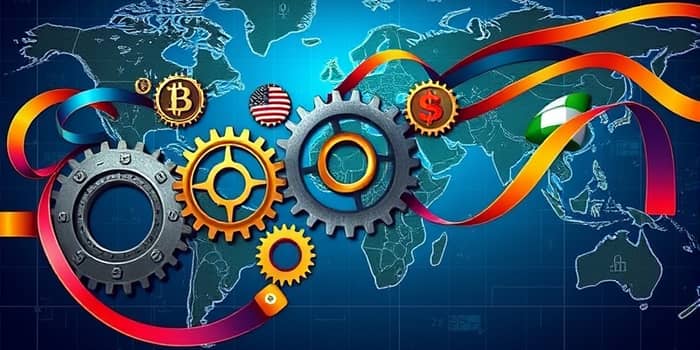
At its core, the forex market is a decentralized, over-the-counter exchange where participants across three main time zones—Asia, Europe, and North America—buy and sell currencies. Operating 24 hours a day, five days a week, it facilitates international commerce, cross-border investing, and risk management. By converting one currency into another, companies settle invoices, investors acquire foreign assets, and central banks adjust reserves to steer monetary policy.
- Average daily volume: over USD 9.6 trillion
- Decentralized, OTC marketplace spanning continents
- Key role in international trade, hedging, and investment
Beyond sheer size, forex levels act as a barometer of national competitiveness and economic health. Exchange rates reflect a tug-of-war between growth prospects, monetary policies, and geopolitical developments, making them critical indicators for policymakers and investors alike.
How Forex Trading Works at a Practical Level
Every forex transaction involves trading currency pairs simultaneously. You buy the base currency while selling the quote currency, with the quoted rate representing the relative value. For instance, if EUR/USD is quoted at 1.09, it means 1 euro buys 1.09 U.S. dollars.
Pairs are categorized into majors, crosses, and exotics based on trading volume and liquidity. Understanding bid and ask prices, along with the spread, clarifies transaction costs. Meanwhile, leverage allows traders to control large positions with smaller capital, emphasizing the need for using risk management strategies to protect against amplified losses.
- Majors: EUR/USD, USD/JPY, GBP/USD, USD/CHF, USD/CAD, AUD/USD, NZD/USD
- Crosses: EUR/GBP, EUR/JPY, AUD/NZD
- Exotics: USD/MXN, EUR/TRY, GBP/ZAR
Trading vehicles include spot forex in the decentralized interbank market, standardized currency futures on exchanges like CME, and specialized forward contracts and options used by corporates for hedging. Each instrument offers unique advantages in terms of liquidity, margin requirements, and settlement conventions.
Fundamental vs Technical Analysis: Two Perspectives
Technical analysis focuses on price charts, patterns, and indicators to forecast short-term moves, whereas fundamental analysis examines economic, financial, and political factors that influence medium- to long-term currency values. While chartists seek momentum and trend confirmations, fundamentalists compare macro variables such as growth rates, inflation, and interest differential to gauge overvaluation or undervaluation.
Ultimately, combining both approaches can provide a balanced view: technical signals help optimize entry and exit timing, while fundamental insights underpin conviction in directional bias. Treating every pair as a duel between two economies rather than a mere price line fosters deeper understanding and informed decision-making.
Professional Macro Approach: Seeing Beyond the Chart
Institutional macro investors dissect each side of a currency pair, evaluating which economy exhibits stronger fundamentals. They assess growth trajectories, consumer and business sentiment, fiscal outlook, and political stability. With this lens, they adopt strategies such as “buy strength, sell weakness,” going long on the currency with superior prospects and shorting the one facing headwinds.
This methodology also considers whether current exchange rates align with models of purchasing power parity or behavioral fair value. When deviations appear pronounced, position size may be increased, anticipating a reversion toward equilibrium.
Core Drivers of Exchange Rates
Exchange rate movements are governed by a complex interplay of factors. Recognizing these drivers enables traders to anticipate potential shifts and align their strategies accordingly.
Interest Rates and Monetary Policy
Interest rate differentials are among the most potent forces in currency markets. Higher policy rates attract foreign capital, bolstering demand for the currency, while lower rates can trigger depreciation. Central bank decisions and forward guidance—reflected in rate forecasts—often lead to sharp moves around meeting announcements.
For example, when the Bank of Japan maintained negative rates while global peers tightened, the yen fell to multi-decade lows. Traders who monitored expectations and real interest rate gaps could position ahead of the sell-off.
Inflation and Purchasing Power
Inflation erodes purchasing power and can undermine a currency’s appeal. Countries with persistently high inflation tend to see their currencies weaken relative to low-inflation peers. Conversely, central banks may raise rates to combat rising prices, temporarily supporting the currency even as real incomes decline.
Key inflation indicators like CPI, PCE, and producer price indexes are eagerly awaited by forex participants, as they offer clues to upcoming policy shifts.
Economic Growth and Macro Data
- GDP growth
- Employment and unemployment
- Retail sales and consumer spending
- Business surveys and PMI readings
- Trade balance figures
Robust data can spark currency rallies, reflecting increased foreign investment prospects. On the other hand, weak figures often lead markets to price in rate cuts, placing downward pressure on the exchange rate.
Balance of Payments and Capital Flows
Persistent trade surpluses generate sustained demand for a country’s currency, while deficits can weigh on its value. Similarly, cross-border capital movements—from foreign direct investment to portfolio reallocations—drive currency demand. In times of uncertainty, safe-haven flows into currencies like the U.S. dollar, Swiss franc, and Japanese yen illustrate how sentiment can override fundamentals temporarily.
Building Your Forex Foundation
To thrive in forex trading, begin with a solid education. Study how economic reports influence markets, use demo accounts to practice order placement, and develop a disciplined risk-management framework. Keep a trading journal to record insights and refine strategies over time.
Embracing the macro view enables you to navigate volatile markets with clarity, while technical tools help optimize execution. Ultimately, forex trading demands continuous learning, patience, and emotional resilience—but with a fundamental framework in place, you are well-equipped to participate in the world’s most dynamic financial arena.
Whether you aim to hedge corporate exposures or pursue speculative gains, understanding the core principles of currency valuation will set you on the path to informed decision-making and sustainable success in the global forex market.
References
- https://tradingwithdavid.com/currency-fundamentals-forex-trading/
- https://www.ofx.com/en-us/blog/exchange-rate-volatility-causes/
- https://tradfi.multibankgroup.com/en/about/blog/trading-101/what-are-the-forex-trading-basics
- https://www.pangea.io/learn/factors-of-foreign-exchange-rates-and-currency-volatility
- https://www.oanda.com/us-en/learn/fundamental-analysis/introduction-to-fundamental-analysis/
- https://www.bbvacib.com/insights/news/bbva-cib-forex/
- https://forex.tradingcharts.com/learn_forex/3._Forex_Trading_Basics.html
- https://www.oanda.com/us-en/trade-tap-blog/trading-knowledge/fx-markets-move/
- https://www.straitsfinancial.com/insights/introduction-to-foreign-exchange-trading
- https://www.trade.gov/foreign-exchange-risk
- https://www.schwab.com/learn/story/foreign-exchange-forex-trading-beginners
- https://www.khanacademy.org/economics-finance-domain/ap-macroeconomics/ap-macro-resources-and-exam-preparation/every-graph-used-in-ap-macroeconomics/a/the-foreign-exchange-market-model
- https://www.ig.com/en/forex/what-is-forex-and-how-does-it-work
- https://www.youtube.com/watch?v=T-Q_fFe_xKU
- https://www.home.saxo/learn/ways-to-trade/forex