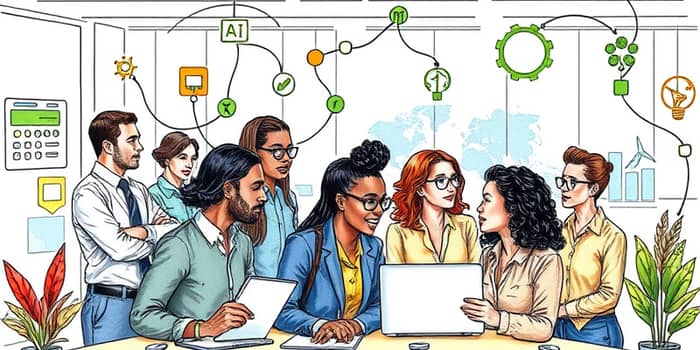
As we approach 2030, rapid technological and social shifts are redefining the global labor market. This deep dive examines the forces shaping jobs, productivity, and wellbeing, offering guidance to navigate change and seize new opportunities.
Macrotrends Shaping the Future Workforce
By 2030, five interconnected forces will transform work worldwide. Understanding these dynamics is essential for policymakers, businesses, and individuals aiming to thrive.
- Technological change (AI and automation)
- Geoeconomic fragmentation and uncertainty
- Demographic shifts and aging populations
- Green transition and sustainability focus
- Expanding digital access worldwide
Demographic shifts like aging populations in Europe and East Asia pose challenges for worker supply and pension systems. Simultaneously, younger demographics in Africa and South Asia present growth potential if digital infrastructure can keep pace.
Investment in renewable energy technologies creates new occupations in sustainable industries. According to recent surveys, 60% of global employers see broadened digital access as a transformative global trend by 2030.
Meanwhile, 86% of firms expect AI disruption across operations, with robotics (58%) and new energy technologies (41%) also rising. Half of employers cite rising costs of living as a major employment driver even as inflation cools to 3.5% by the end of 2025.
Remote & Hybrid Work: Scale, Trends, and Preferences
Remote and hybrid arrangements have become embedded in modern work culture, reshaping how tasks are organized and teams collaborate.
- 48% of workers globally are remote at least part-time
- 22% of the U.S. workforce works remotely
- 83% of employees prefer hybrid roles
- 27% of U.S. employees remain fully office-based
Sectoral differences matter: the tech industry leads with 67% of employees working primarily from home, while healthcare and education adapt hybrid models. Top-rated U.S. employers use flexibility to attract talent, with 97 of the Fortune 100 offering remote or hybrid options.
These shifts reflect a rapid transformation in work culture fueled by employee preferences and corporate strategies. Productivity improvements are notable: 61% of remote staff report higher output, while 81.4% highlight enhanced work-life balance.
However, burnout rates reach 86% among full-time remote workers, with loneliness (67%) and digital overload challenging wellbeing. Environmental and cost benefits from reduced commuting further underscore the appeal of flexible models.
Economic Impacts and Job Transformation
The spread of AI and automation will reshape global employment. Structural transformations will affect routine tasks most directly, while creating new roles in advanced tech and services.
Projections indicate that 22% of current jobs will undergo structural change by 2030, generating 170 million new positions and displacing 92 million roles—a net gain of 78 million jobs.
Although short-term unemployment may rise by half a percentage point, long-term productivity gains are expected to fuel economic growth. Reshoring trends driven by geopolitical concerns and supply chain resilience also promise to offset some displacement in manufacturing.
This table highlights pivotal figures guiding corporate investments and public policy initiatives worldwide.
Skills Gap, Upskilling, and Wage Polarization
Rapid advances in AI and digital tools intensify skill requirements. Without adaptive training, organizations risk falling behind and workers face stagnating careers.
63% of employers cite skill shortages as a primary obstacle, leading 85% to commit resources to training programs. Lifelong learning and adaptive career pathways are now central to success.
Key upskilling areas include:
- AI and big data analytics
- Cybersecurity and risk management
- Advanced technological literacy
- Emotional intelligence and social skills
Those with AI capabilities earn a 56% premium on salaries, highlighting the importance of future-focused skill development. Public-private partnerships fund apprenticeships and bootcamps to bridge gaps.
Mental Health, Wellbeing, and Work-Life Balance
Flexibility offers autonomy but introduces new stressors. Extended work hours, constant connectivity, and isolation drive burnout and erosion of personal time.
Companies are piloting four-day workweeks, no-meeting Fridays, and mandatory offline days to combat digital fatigue. Digital well-being tools and virtual community events support remote staff.
Manager training in remote leadership fosters connection and trust, addressing loneliness and improving morale. A focus on psychological safety is emerging as a competitive advantage.
Policy Responses and Corporate Strategies
To safeguard workers and promote growth, governments and firms are adapting strategies. The EU’s digital education action plan and U.S. workforce development grants emphasize inclusive upskilling.
Nearly 67% of U.S. companies will maintain flexible work options through 2025, balancing collaboration needs with employee autonomy. In emerging markets, tech firms partner with local governments to create rural digital hubs.
By addressing mental health, equitable access, and social safety nets, stakeholders aim to mitigate risks of workforce fragmentation and ensure broad-based prosperity.
Global Outlook and Environmental Benefits
Adoption rates vary geographically: North America, the U.K., and Australia lead remote work, while Asia lags due to infrastructure gaps.
Latin America sees growing remote staffing for multinationals, and African freelancers leverage global platforms, boosting income and skills.
The environmental dividend from reduced commuting is substantial, cutting carbon emissions and aligning corporate practices with sustainability goals.
In conclusion, the future of work will be defined by the interplay of technology, policy, and human capital. Organizations that embrace flexibility, invest in forward-looking talent development, and prioritize wellbeing will lead in the new economy.
By making deliberate choices and fostering collaboration across sectors, we can shape an inclusive, resilient, and prosperous labor market for all stakeholders.
References
- https://us.neat.no/resources/the-state-of-remote-work-2025-statistics/?nr=US
- https://www.pwc.com/gx/en/issues/workforce/hopes-and-fears.html
- https://www.yomly.com/remote-work-statistics/
- https://www.goldmansachs.com/insights/articles/how-will-ai-affect-the-global-workforce
- https://founderreports.com/return-to-office-statistics/
- https://www.weforum.org/publications/the-future-of-jobs-report-2025/
- https://www.chanty.com/blog/remote-work-statistics/
- https://www.oecd.org/en/topics/policy-issues/future-of-work.html
- https://www.roberthalf.com/us/en/insights/research/remote-work-statistics-and-trends
- https://www.mckinsey.com/featured-insights/future-of-work
- https://www.gallup.com/401384/indicator-hybrid-work.aspx
- https://www.brookings.edu/topics/future-of-work/
- https://fortune.com/2025/11/17/remote-hybrid-four-day-work-week-time-use-survey/
- https://www.federalreserve.gov/newsevents/speech/waller20251117a.htm
- https://www.zoom.com/en/blog/remote-work-statistics/
- https://www.nexford.edu/insights/how-will-ai-affect-jobs
- https://siepr.stanford.edu/publications/essay/working-home-2025-five-key-facts
- https://www.achievers.com/blog/remote-work-statistics/