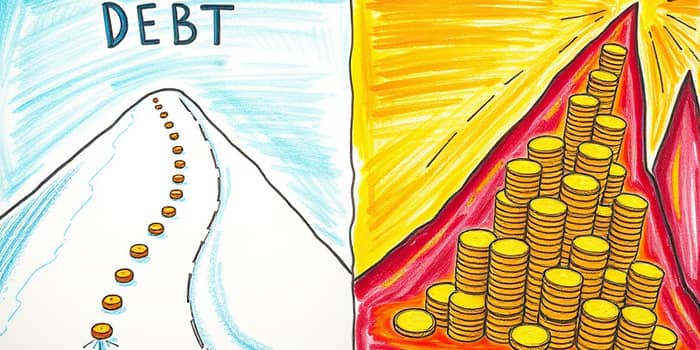
Choosing a debt repayment strategy can feel overwhelming when faced with multiple balances and varying interest rates. Two popular approaches—the Debt Snowball and Debt Avalanche methods—offer structured paths to becoming debt-free. Each method has its own philosophy, strengths, and challenges, and understanding these differences is crucial for finding the right approach for your financial journey.
Understanding the Two Methods
The Debt Snowball Method focuses on eliminating debts with the lowest balances first, regardless of their interest rates. By tackling smaller balances quickly, you experience quick wins and psychological motivation that can fuel continued progress.
In contrast, the Debt Avalanche Method zeroes in on debts with the highest interest rates first. This approach aims to minimize total interest paid over the life of your repayment plan, saving money and reducing the overall payoff time.
Key Differences at a Glance
Pros and Cons of Each Method
Both methods carry unique advantages and drawbacks that align differently with personal finance goals and psychological needs. Reviewing these side by side can help you decide which path matches your temperament and situation.
- Snowball pros: Quick wins build momentum and boost confidence when small balances vanish swiftly.
- Avalanche pros: Efficient interest savings reduce total cost and accelerate overall payoff timeline.
- Snowball cons: Higher total interest payments can accumulate when large balances carry high rates longer.
- Avalanche cons: Delayed gratification may challenge motivation when substantial debts linger initially.
Real-World Scenarios Illustrating Differences
Imagine a borrower with three debts: a $5,000 credit card at 20% APR, a $1,000 personal loan at 10%, and a $10,000 private student loan at 8%. With the Debt Avalanche method, extra payments go toward that high-interest credit card first. In contrast, the Debt Snowball method directs extra funds to the $1,000 personal loan, wiping it out quickly and creating an early payoff victory.
Another example involves a $9,000 credit card at 24.06%, a $15,000 student loan at 5.80%, and an $8,000 auto loan at 6.58%. By following the Avalanche method, you tackle the sky-high card interest first, saving over $1,200 in interest compared to the Snowball approach, which would eliminate the auto loan first for a psychological lift.
In a scenario with multiple credit cards—$3,000 at 20.51%, $5,000 at 18%, and $7,000 at 15%—the Avalanche method can cut nearly a month off your payoff timeline and save around $230 in interest. The Snowball approach, however, gives you an early celebration as soon as that smallest $3,000 balance clears.
Research Findings and Expert Opinions
A study from JMU Scholarly Commons confirms that the Debt Avalanche method is faster and more efficient in nearly all situations, especially as total debt balances grow. However, the efficiency gap often remains modest: LendingTree research found differences as small as $29 in total interest paid between the two methods in some cases.
Financial institutions also weigh in. Experian advises that Avalanche suits those who can maintain self-discipline over time, while Snowball is ideal for individuals who crave early encouragement. Fidelity echoes that Avalanche reduces interest costs but Snowball boosts morale. Wells Fargo highlights long-term cost minimization via Avalanche and momentum via Snowball.
Which Method Should You Choose?
The optimal strategy hinges on your personality and financial goals. If you thrive on immediate satisfaction and momentum boost, the Debt Snowball method could keep you engaged and consistent. If you can weather slower initial progress and prioritize savings, the Debt Avalanche method will maximize interest reduction and shorten your payoff timeline.
Regardless of your choice, consistent payments and tracking progress are non-negotiable. Set up automatic transfers, monitor balances, and celebrate milestones—no matter how small—to maintain conviction and momentum throughout your journey.
Additional Considerations
Before committing to one method, reflect on these factors:
- Your natural motivation style and reward preferences
- The total interest rates and balances across all debts
- Flexibility to adjust your plan when financial circumstances change
- Long-term financial objectives, such as saving for retirement or emergencies
- Support systems or accountability partners to keep you on track
Conclusion
The Debt Avalanche method often wins the efficiency battle, saving you money and shortening your debt payoff period. However, the Debt Snowball method offers critical psychological fuel for those who need quick affirmation to stay the course. Ultimately, the best approach aligns with your personality, financial profile, and long-term aspirations. Whichever method you choose, establish a clear plan, remain disciplined, and celebrate each victory—big or small—on your path to financial freedom.
References
- https://www.experian.com/blogs/ask-experian/avalanche-vs-snowball-which-repayment-strategy-is-best/
- https://www.lendingtree.com/debt-consolidation/debt-avalanche-snowball-study/
- https://www.westernsouthern.com/personal-finance/debt-avalanche-vs-debt-snowball
- https://commons.lib.jmu.edu/cgi/viewcontent.cgi?article=1672&context=honors201019
- https://www.discover.com/personal-loans/resources/consolidate-debt/payoff-debt-snowball-vs-avalanche/
- https://money.com/americans-define-financial-success/
- https://www.fidelity.com/learning-center/personal-finance/avalanche-snowball-debt
- https://www.wellsfargo.com/goals-credit/smarter-credit/manage-your-debt/snowball-vs-avalanche-paydown/
- https://blog.umb.com/debt-strategy-comparison-avalanche-snowball/