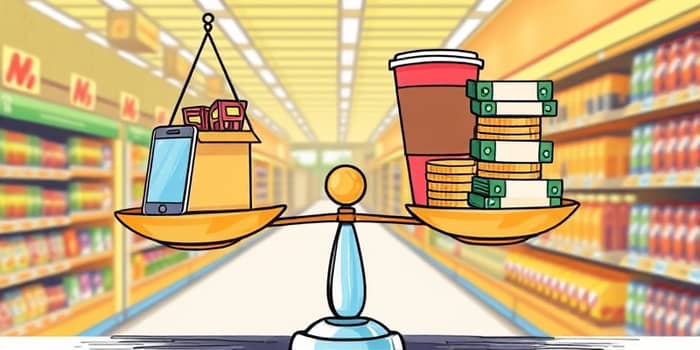
In a world where speed and ease often triumph, understanding the true price of convenience has become essential. Late 2025 brings a complex tapestry of economic pressures and consumer desires that demand careful navigation.
Consumers balance time, money, and satisfaction in daily decisions—from online grocery orders to digital banking. This article examines the ripple effects of those choices and offers practical guidance to maintain both convenience and fiscal health.
Macro Trends Shaping Consumer Choices
Inflation remains a looming force. Nearly 59% of Americans identify soaring prices as their top stressor, while half report strain from essentials like rent, groceries, and utilities. Against this backdrop, the definition of value is shifting.
At the same time, the market adapts. Retailers and service providers race to eliminate friction, meeting expectations for fast, reliable, low-cost experiences. Yet those improvements often carry a higher ticket price.
Understanding the Convenience-Value Trade-off
The modern shopper navigates a fragmented, omnichannel marketplace. On average, U.S. households frequent 39 unique retailers annually, drawn by specific benefits—price, speed, or service. Omnichannel shoppers spend almost twice as much as those using a single channel.
Even in digital grocery, where 69% of buyers say price matters most, nearly half will sacrifice cost for rapid delivery and seamless returns. These decisions illustrate the delicate balance between saving dollars and saving time.
Consumer Behavior Across Demographics
Generational dynamics add nuance. Gen Z, despite limited savings, shows remarkable willingness to leverage credit. About 34% are comfortable buying on credit, compared to lower rates among older cohorts. Furthermore, 27% of Gen Z globally embrace buy-now-pay-later services.
- Millennials adopt digital banking three times more often than Boomers.
- High-income households fuel e-commerce and club-store growth.
- Low-income families gravitate towards value and dollar stores.
These patterns highlight how income level and life stage inform the price-vs-convenience dilemma.
Retail & Service Sector Case Studies
In Q2 2025, U.S. convenience stores faced an almost 8% decline in sales, driven by a 12% drop in fuel revenue. Yet foodservice within those same outlets grew 3%, buoyed by a 5% increase in spend per visit.
Behind the scenes, operational costs can eclipse expectations. Manual invoice processing costs between $12 and $15 per invoice, whereas automation slashes that to $2–$4. Businesses must invest in technology to counteract rising inefficiency and hidden costs.
Financial Services: Banking and Beyond
Switching banks remains daunting. Forty-one percent of consumers cite the hassle as a key barrier, while 24% worry about fees. Despite this, more than two in five Americans now use non-traditional digital banking providers—especially Millennials.
This push toward digital platforms underscores a broader theme: consumers are willing to pay premiums for seamless experiences, even if it means navigating new fee structures or risking hidden charges.
Everyday Indulgences and Strategic Splurges
Small luxuries offer a psychological lift amid financial strain. From gourmet coffee to premium candles, “everyday indulgence” remains resilient. Over a third of global consumers trade down in one category to splurge in another, and 19% plan to cut nondiscretionary spending to afford special treats.
These choices form a tapestry of micro-decisions that collectively shape budgets. The allure of quick pick-me-ups can erode savings if left unchecked, yet strategic splurges can bolster well-being when balanced.
Strategic Trade-offs for Consumers
To navigate these dynamics, consider a structured approach:
- Prioritize non-negotiable essentials: rent, groceries, utilities.
- Assess the true cost: include fees, time saved, and possible discounts lost.
- Experiment with automation: in tools and subscriptions for long-term efficiency.
- Set deliberate splurge budgets for small indulgences.
By framing convenience as one variable among many, you can make choices that serve both your lifestyle and your financial goals.
Macro-Economic Drivers and Policy Implications
At a broader level, policies such as tariffs influence consumer costs. A 10% tariff on imported goods can push prices upward, shifting demand and altering trade-offs. Similarly, Engel’s law predicts that as incomes rise, spending pivots from necessities to services—convenience offerings proliferate.
These forces require both consumers and businesses to stay vigilant. For households, awareness of economic trends can inform smarter purchases. For organizations, investment in automation and omnichannel fulfillment is a safeguard against margin compression.
Conclusion: Balancing Convenience with Financial Health
The pursuit of convenience often delivers immediate gratification but carries long-term ramifications. From omnichannel shopping to digital banking, every swipe and click involves an exchange of value, time, and money.
By acknowledging the implicit and explicit costs of our choices, we regain control. Thoughtful budgeting, targeted automation, and deliberate splurges can preserve both convenience and financial well-being.
In late 2025, the winners will be those who master the art of balance—enjoying the benefits of a fast-paced world without sacrificing their economic resilience.
References
- https://fintech.com/blog/the-state-of-convenience-retail-in-2025-what-the-data-is-telling-us
- https://www.mckinsey.com/industries/consumer-packaged-goods/our-insights/state-of-consumer
- https://www.driveresearch.com/market-research-company-blog/banking-trends-statistics/
- https://www.circana.com/post/consumers-shop-at-39-unique-retailers-a-year-focusing-on-convenience-and-value-reports-circana
- https://www.emarketer.com/content/5-key-stats-about-what-convenience-means-2025
- https://www.paymentscardsandmobile.com/consumers-put-price-on-convenience-as-financial-pressures-persist/
- https://nielseniq.com/global/en/insights/analysis/2025/us-consumers-redefining-value-2026/