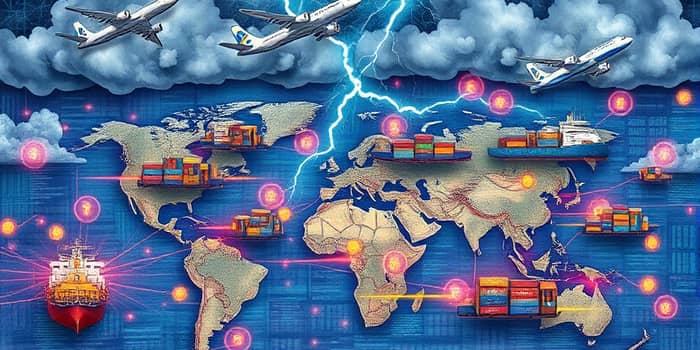
In an increasingly interconnected world, sudden disruptions can echo across continents, threatening the flow of goods, services, and data. This article unpacks the roots of disruption and offers concrete pathways to resilience.
Defining Shocks and Vulnerabilities
Supply chain shocks are sudden, complex disruptions impacting flows of materials, capital, and information from suppliers to end users. Vulnerabilities are the weaknesses or stress points hindering recovery when shocks occur.
Understanding these concepts is the first step toward building systems that withstand uncertainty rather than buckle under pressure.
Primary Causes of Disruption
- Economic Instability and Inflation Pressures: Volatile oil prices and shifting trade policies drive costs up and supplier reliability down, with global disruptions costing businesses an estimated $184 billion per year.
- Rapidly Evolving Geopolitical Tensions: Tariffs of up to 145% on Chinese imports, the Red Sea crisis, and the Russia–Ukraine conflict have led to reshoring and “friend-shoring” of production.
- Regulatory Shifts and Compliance Demands: New due-diligence rules like the Uyghur Forced Labor Prevention Act and Scope 3 emissions tracking create layers of oversight that can slow traditional flows.
- Cybersecurity Breaches in Digital Supply Chains: Over half of large organizations now cite supply chain risk as their top cyber concern; breaches cost an average $4.44 million each.
- Environmental and Climate Shocks: Extreme weather events—from wildfires to flooding—disrupt agriculture, manufacturing, and port operations, affecting 76% of European shippers last year.
- Persistent Labor Shortages: A U.S. trucking deficit exceeding 80,000 drivers (projected to double by 2030) and aging workforces in logistics amplify delivery delays.
Amplification Mechanisms and Impacts
Shocks rarely occur in isolation. They cascade through complex webs of suppliers, magnifying delays, cost spikes, and shortages. Manufacturers now increase inventory buffers by up to 30% to combat tariff uncertainty, but this ties up capital and space.
The financial toll is steep: companies lacking robust risk management can lose up to 42% of EBITDA in a major disruption. Flatbed trucking rates rose 4.5% year-over-year as carriers passed on fuel and labor costs.
Beyond dollars and cents, social and policy ramifications emerge: consumer boycotts, reciprocal trade barriers, and intense regulatory scrutiny shape corporate decisions.
Strategies for Building Resilience
- Diversification of Supply Bases: Dual sourcing, reshoring, and multiple geographic footprints reduce overreliance on single suppliers.
- Investment in Predictive Technologies: Artificial intelligence and digital twins enable scenario modeling and early warning of potential breakdowns.
- Cyber Defense and Third-Party Oversight: Continuous monitoring, penetration testing, and security rating systems shore up digital vulnerabilities.
- Climate Risk and Sustainability Integration: Embedding Scope 3 emissions data and supplier engagement frameworks helps anticipate weather-driven shortages.
- Workforce Augmentation and Automation: Retraining programs and robotics address labor deficits, keeping production lines moving.
- Governance and Contingency Planning: Embedding risk management into strategic design transforms supply chains from fragile to adaptive.
These approaches do more than mitigate harm—they create anti-fragile supply chains that grow stronger under stress, unlocking competitive advantage and long-term stability.
Looking Ahead: Trends and Future Outlook
Supply chain shocks are expected to rise in both frequency and severity. As complexity increases, so does opacity: only 21% of organizations currently have more than half their suppliers under active oversight.
Policymakers balance economic security with cost burdens of resilience measures, often resulting in trade-offs between agility and expense. Businesses that embrace data transparency, adaptive governance, and proactive risk culture will differentiate themselves in volatile markets.
Ultimately, the greatest strength lies in anticipating disruption and embedding flexibility into every tier. By viewing shocks not as anomalies but as integral to the modern landscape, organizations can align people, processes, and technology to thrive in uncertainty.
References
- https://www.globalbankingandfinance.com/global-supply-chain-disruptions-in-2025-causes-effects-and-resilience-strategies/
- https://www.xeneta.com/blog/the-biggest-global-supply-chain-risks-of-2025
- https://deepstrike.io/blog/supply-chain-attack-statistics-2025
- https://www.richmondfed.org/publications/research/economic_brief/2025/eb_25-02
- https://www.everstream.ai/articles/2025-risks-cybersecurity/
- https://www.ey.com/en_us/ey-center-for-executive-leadership/supply-chain-quarterly-update
- https://www.oecd.org/en/publications/2025/09/economic-security-in-a-changing-world_78f3b129/full-report/economic-security-and-vulnerabilities-in-international-supply-chains_dc88aefa.html
- https://unctad.org/news/global-supply-chains-under-strain-ministers-call-just-and-resilient-transitions
- https://www.z2data.com/insights/22-critical-supply-chain-risks-to-watch-for-in-2026
- https://tradeverifyd.com/resources/supply-chain-statistics
- https://www.weforum.org/stories/2025/07/strengthening-manufacturing-supply-chains-new-industrial-era/
- https://www.isaca.org/resources/news-and-trends/isaca-now-blog/2025/the-2025-software-supply-chain-security-report
- https://www.newyorkfed.org/research/policy/gscpi
- https://socradar.io/hidden-cost-of-supply-chain-breaches-2025-statistics/
- https://www.bcg.com/publications/2025/cost-resilience-new-supply-chain-challenge